Puget Sound, WA · $190B (proposal)
SEA-22 · Puget Sound Multi-Node Isolation Grid
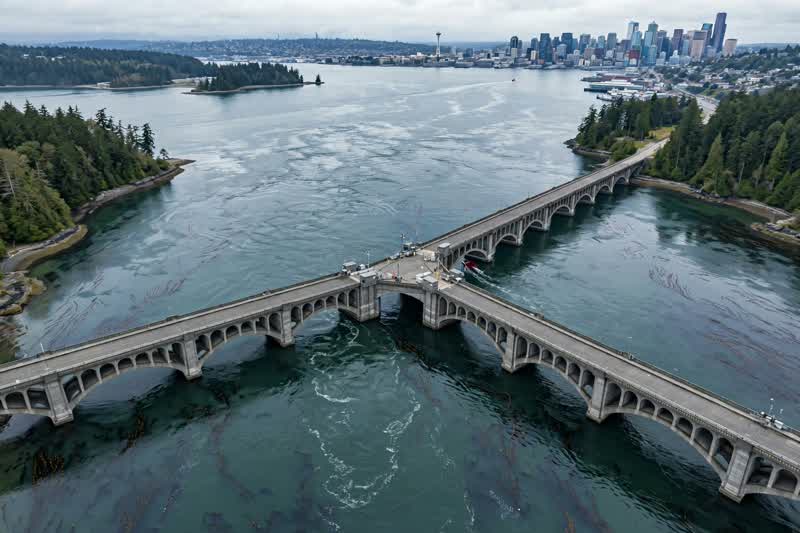
Three interconnected tidal blockades at the Sound's natural bottlenecks, engineered as elevated eco-viaducts with open underwater arches so orcas and salmon pass freely — protecting Seattle and Tacoma while keeping the ecosystem connected.
Pros
- The eco-viaduct design is the most ecologically thoughtful hard infrastructure on this list.
- Three smaller blockades are more resilient than one mega-structure — no single point of failure.
- Protects two major cities and the Puget Sound naval installations in one system.
Cons
- "Unobstructed wildlife corridors" under a tidal blockade is an untested claim at this scale.
- 9 million tons of concrete pylons in orca habitat will face the fiercest environmental review in America.
- Three construction sites multiply the logistics and timeline risk.
Feasibility: The design philosophy is right — build the ecology into the structure from day one. But the Southern Resident orcas are among the most legally protected animals on Earth, and any project in their habitat faces a review process measured in decades. Technically feasible; legally, the long pole in the tent.
Aerial mock-up: Three elegant concrete viaducts crossing the Sound's bottlenecks, with massive open arches beneath guaranteeing passage for orcas and salmon.