Great Lakes Basin · $180B (proposal)
GLC-25 · Mid-Continental Great Lakes Control Grid
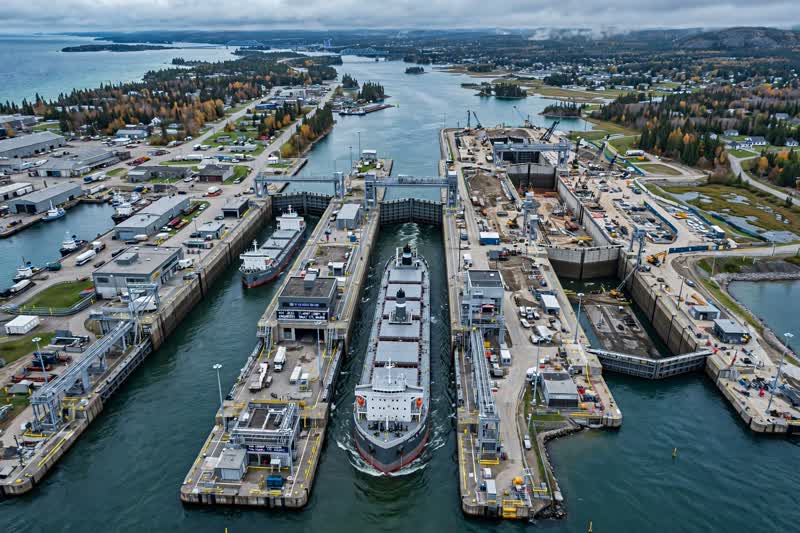
Automated level-control gates on every major lock and canal connecting the Great Lakes to the Atlantic and Mississippi systems, run by a centralized digital control matrix that adjusts water levels in real time — absolute hydrological stability for the industrial heartland.
Pros
- The Great Lakes hold 20% of the world's surface freshwater — managing them precisely is genuinely strategic.
- Automated gates are proven tech; the St. Lawrence Seaway already runs on a smaller version of this idea.
- Stable levels protect trillions in shoreline property and industrial water intakes.
Cons
- "Absolute hydrological stability" across five lakes and two countries is a control-systems fantasy — nature doesn't do absolute.
- The lakes are governed by a US-Canada treaty; unilateral control infrastructure is a diplomatic incident.
- Centralized digital control of continental water is a single cyberattack away from catastrophe.
Feasibility: Half of this already exists — the Soo Locks and St. Lawrence Seaway are real, working level-control systems. The proposal's leap is the "absolute" centralized automation across the whole basin, which ignores both the treaty framework and the limits of control theory. Modernize the existing locks; skip the panopticon.
Aerial mock-up: Modernized automated steel locks at the Great Lakes choke points, high-speed rail viaducts arcing over them, connecting the industrial interior.