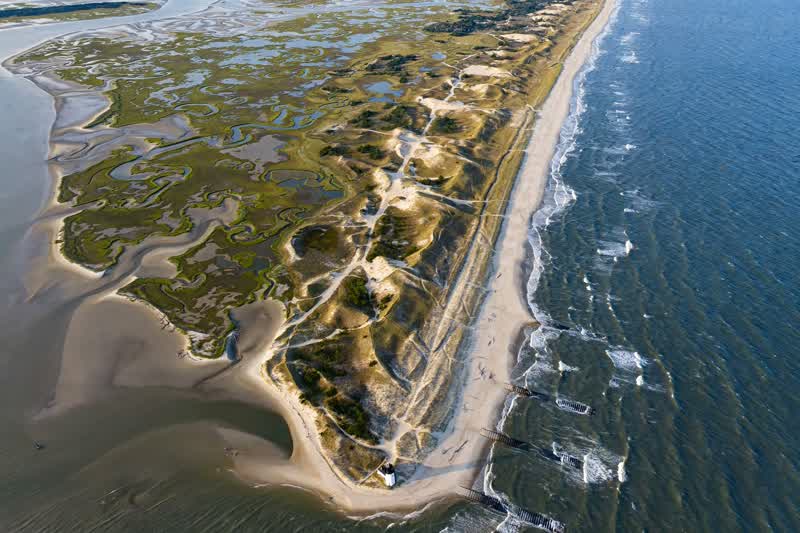
Cape May, NJ · $85B (proposal)
DEL-4 · Delaware Bay Surge Absorption Cavern Array
A network of 50-meter-deep subterranean chambers bored beneath the Cape May Peninsula, linked to coastal intake valves that would swallow up to 80 million gallons of sudden storm surge and hold it underground until the danger passes.
Pros
- Completely invisible from the surface — no visual or tourism impact on the Cape May coastline.
- Underground storage avoids the land-acquisition battles that kill surface reservoirs.
- Intake valves could double as managed aquifer recharge during normal conditions.
Cons
- Excavating huge caverns in a coastal water table is brutally hard — saltwater intrusion during boring is near-certain.
- 80 million gallons sounds big until a hurricane pushes billions; the capacity math needs checking.
- Underground voids in a seismic-adjacent coastal zone raise long-term subsidence questions.
Feasibility: The hardest sell on this list. Tokyo's underground flood-control caverns (the G-Cans project) prove the concept at smaller scale — about $2B for 670,000 cubic meters of storage. Scaling that to surge volumes in saturated coastal soil, with cryogenic ground-freezing as the fix, is an engineering moonshot. Possible in principle, nightmarish in practice.
Aerial mock-up: Invisible from the surface — the peninsula keeps its natural dunes and flora, with only low-profile armored intake grates embedded in the surf zone.