Plaquemines Parish, Louisiana · $140B proposed
Mississippi Delta Super-Hub
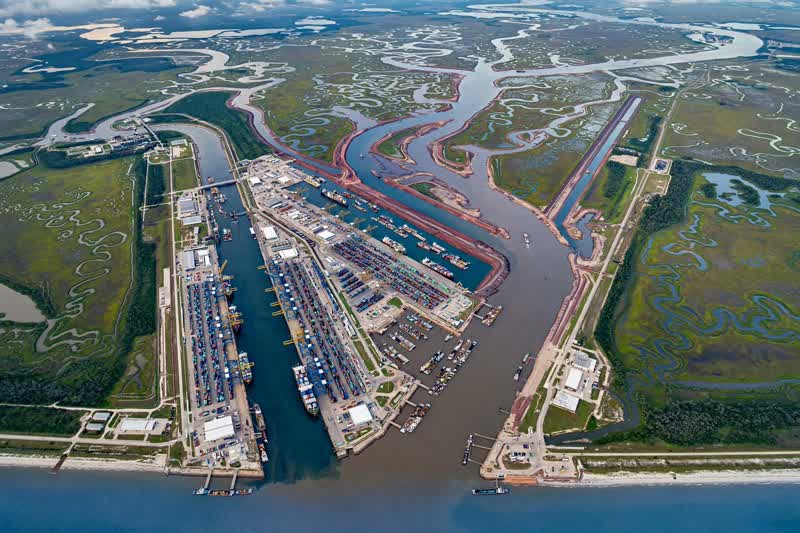
A 25-berth automated terminal at the mouth of the Mississippi, built to capture the entire interior agricultural export flow coming downriver — with subterranean vaults to swallow hurricane storm surge.
Pros
- The Mississippi moves ~60% of US grain exports; a deepwater terminal at the river mouth sits at the end of the world's most productive agricultural conveyor belt.
- Barge-to-ship transfer at the delta avoids the draft limits that force upriver ports to light-load vessels.
- The storm-surge vault concept, while exotic, addresses a genuine existential threat honestly.
Cons
- Plaquemines Parish is sinking, at sea level, in the path of every major Gulf hurricane. Louisiana's own $50B coastal master plan is just trying to slow the land loss.
- The Mississippi wants to change course — the Old River Control Structure is the only thing keeping the river in its current channel. Building a $140B port on a river that is geologically trying to leave is bold.
- Continuous dredging at a river mouth carrying the continent's silt load is a permanent, nine-figure annual cost.
Feasibility: Low. The agricultural logic is sound — the grain really does flow this way — but the geology is the enemy. You would be building the most expensive port in America on subsiding mud, in a hurricane zone, at the mouth of a river fighting to abandon its channel. Nature gets a vote, and here it votes no.
Aerial mock-up: Built directly over subterranean storm vaults — massive circular concrete caps with solar arrays on top — with specialized heavy-duty berths handling agricultural flows.