Galveston/Houston · $125B proposed
Texas Star Maritime Vertex
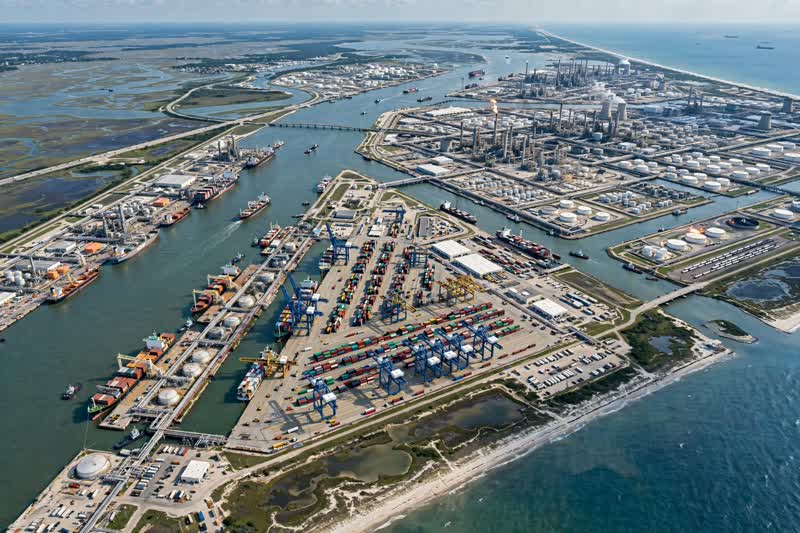
An engineered deepwater spit extending into the Gulf, with specialized berths for chemical and heavy-hardware vessels, feeding the Texas industrial interior via high-speed rail.
Pros
- Houston is already America's petrochemical capital — the Houston Ship Channel moves ~69M tons a year and a $1B widening/deepening is genuinely underway.
- Chemical-berth specialization matches real cargo: this is where the hazardous, high-value liquid bulk actually ships from.
- Texas has the political will and the industrial demand to actually permit large port projects.
Cons
- Hurricane exposure is severe — the Galveston/Houston coast has been devastated repeatedly, and a chemical port multiplies the consequence of any storm failure.
- The "corrosion-resistant alloy" supply bottleneck is real: specialty marine alloys have limited domestic foundry capacity.
- An artificial deepwater spit in the Gulf is a maintenance liability — the sea reclaims engineered spits relentlessly.
Feasibility: Moderate-high for expansion, low for the artificial-spit mega-structure. The Houston Ship Channel's real growth story is the strongest argument on the Gulf Coast — but it works because it follows existing industry, not because someone built a $125B spit into the Gulf. Build on the channel; skip the spit.
Aerial mock-up: Built over subterranean storm vaults with specialized heavy-duty berths for chemical flows, the engineered spit reaching into the Gulf.