Richmond/Oakland, California · $130B proposed
Golden Gate Logistics Wall
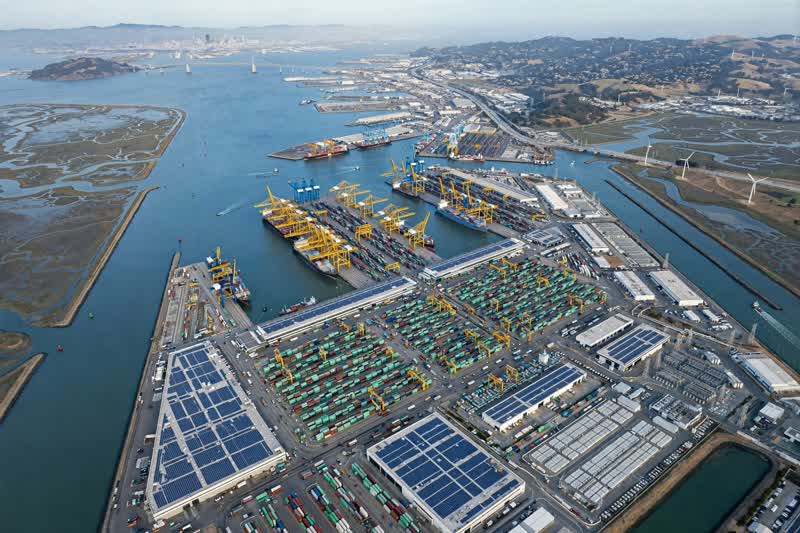
A consolidated Richmond/Oakland super-base: the entire Bay Area port complex rebuilt as a zero-emission automated crane matrix, powered by dedicated small modular reactors.
Pros
- Oakland already moves ~2.4M TEU with established transpacific services — real cargo, real shipping lines.
- Consolidating Richmond and Oakland eliminates duplicated overhead and could genuinely improve efficiency.
- Zero-emission cargo handling is already California policy; the regulatory tailwind is real.
Cons
- California's grid already strains under existing load — an all-electric mega-port needs gigawatts that don't exist in the Bay Area's power budget.
- No commercial small modular reactor operates anywhere in the US as of 2026 (NuScale's flagship project was cancelled). The power fix is vaporware on the proposal's own timeline.
- Bay dredging and fill face some of America's most restrictive coastal regulation — the Coastal Commission has killed far smaller projects.
Feasibility: Moderate for modernization, low for the full vision. Oakland's real future is steady automation and electrification paced to actual grid capacity — which is exactly what's already happening, slowly. The $130B version requires power plants that don't exist and permits California won't grant. Electrify at the speed of the grid.
Aerial mock-up: Among the largest ports on earth — an unbroken zero-emission podium of moving autonomous cranes along the East Bay shoreline.