LA/Long Beach · $210B proposed
Southern California Absolute Hub
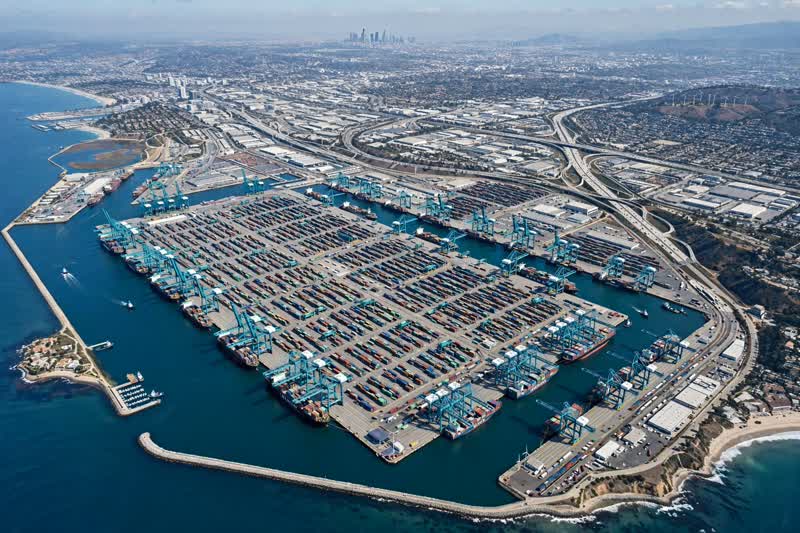
The consolidation of LA and Long Beach into a single 45-berth automated container complex — the largest on Earth — with containers moving ship-to-train in 12 minutes and no surface yards at all.
Pros
- This is already the #1 container gateway in the Western Hemisphere (~20M TEU combined). The demand isn't projected — it's measured, daily.
- Automation is genuinely underway: Pier 400 and TraPac already run automated stacking cranes. The technology is proven at this exact location.
- Eliminating surface yards attacks the ports' real constraint — land — rather than inventing new ones.
Cons
- The ILWU. Full automation of 45 berths means eliminating tens of thousands of longshore jobs — the union has shut down the ports over far less, and its contract leverage is absolute.
- $210B is roughly 10x what comparable automation programs actually cost worldwide (Rotterdam's Maasvlakte II: ~€3B).
- Subterranean container vaults beneath a working port in an earthquake zone is an engineering risk nobody has ever attempted.
Feasibility: High underlying economics, brutal political reality. Of all 15 proposals, this one has the cargo, the location, and the proven technology. The bottleneck isn't engineering — it's labor. Until there's a negotiated path with the ILWU, 45 automated berths remain a rendering. The ports will automate berth by berth over decades, not all at once by decree.
Aerial mock-up: 45 contiguous berths forming a massive, unbroken zero-emission podium of moving autonomous cranes — the largest port on earth.