Tampa Bay, Florida · $80B proposed
West Florida Logistics Anchor
A deepened, automated Tampa Bay complex tuned for Latin American trade loops, with dredged 24-meter channels and rail distribution across the Southeast.
Pros
- Latin American trade is real and growing — Tampa is geographically well-positioned for Caribbean and northern South American loops.
- Port Tampa Bay already handles diverse bulk cargo; there's an operating port to build on, not a greenfield.
- Florida's population growth guarantees rising import demand for decades.
Cons
- Tampa Bay averages ~12 feet deep. Dredging it to 78 feet would be an ecological catastrophe — seagrass beds, manatee habitat — triggering decades of lawsuits.
- Limestone bedrock makes the dredging itself brutally slow and expensive, far beyond normal harbor work.
- Shallow-draft reality means Tampa will never compete with deepwater Atlantic ports for post-Panamax container traffic regardless of spending.
Feasibility: Low as a deep-draft container mega-port. The bay's geology and ecology are hard constraints, not engineering challenges to be solved with money. Tampa's real future is as a bulk, cruise, and regional distribution port — valuable, but not this. The 2-for-1 wetlands offset is a nice idea that wouldn't survive its first courtroom.
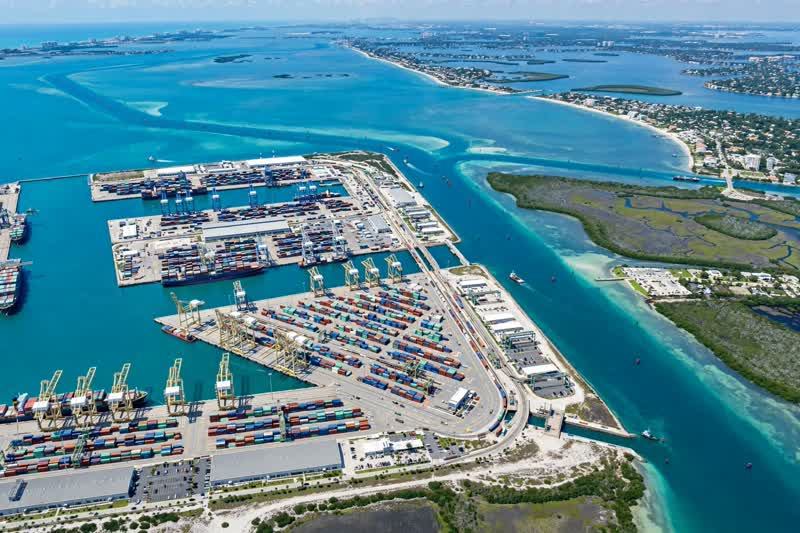
Aerial mock-up: Expansive deep-dredged bay with automated gantry cranes pulling Latin American cargo manifests, rail spurs fanning across the peninsula.