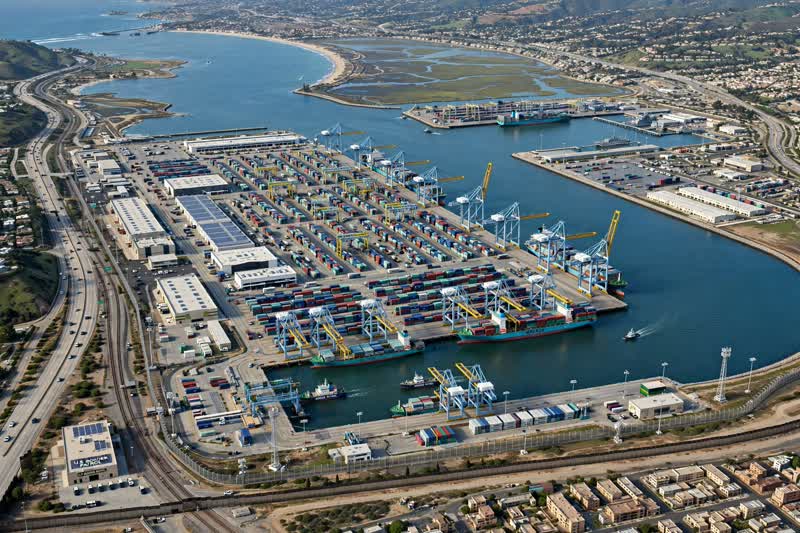
San Diego · $80B proposed
San Diego Sovereign Frontier
A secure automated port at the southern border, built for hemispheric manufacturing supply chains with cryptographic customs scanning that clears containers without stopping them.
Pros
- Nearshoring is real: manufacturers are genuinely shifting supply chains from Asia to Mexico, and San Diego sits at the hinge.
- In-motion cryptographic scanning is a legitimate direction for customs tech — the concept isn't crazy, just early.
- A border manufacturing port aligns with actual trade policy trends.
Cons
- San Diego Bay is shallow, small, and dominated by the Navy — Naval Base San Diego and the submarine base control the waterfront that matters.
- The port currently handles minimal container traffic (~1M tons, mostly breakbulk). There is no container market to automate.
- Dredging a naval bay to 24 meters for commercial use is a non-starter with the Department of Defense.
Feasibility: Very low as a container mega-port. The nearshoring thesis is the smartest strategic idea on this list — but it belongs at a land border crossing or at Ensenada, not in a Navy-controlled bay with no container trade. The Navy's answer, as at Hampton Roads, is no.
Aerial mock-up: Dense, high-security automated berths operating directly alongside cross-border manufacturing zones, scanning portals arching over the rail lines.