Seward, Alaska · $90B proposed
Alaskan Sovereign Link
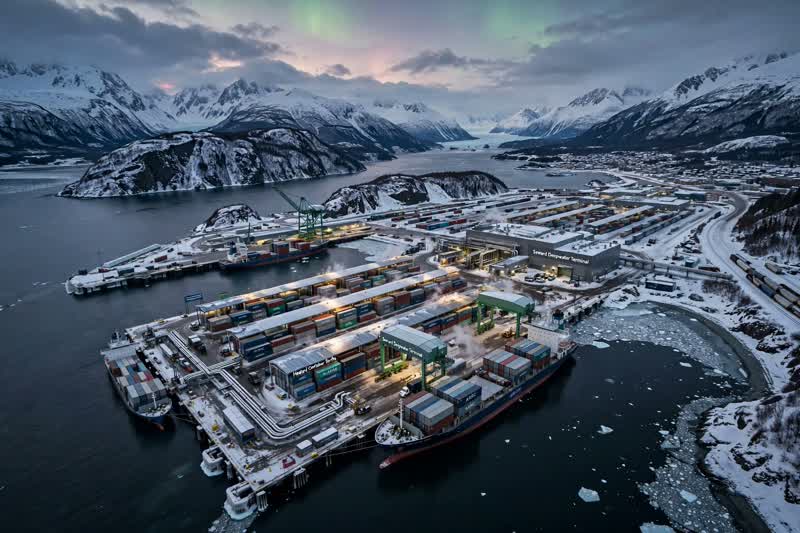
A sub-arctic deepwater terminal at Seward with heated automated rail tracks and ice-proof cranes, built to move northern minerals and resources to global markets year-round.
Pros
- Arctic resource extraction is a real long-term play — critical minerals demand is projected to grow several-fold by 2040.
- Seward is ice-free year-round (unlike most of Alaska's coast), a genuine geographic advantage.
- Sub-arctic port engineering is a solved discipline — Alaska and Norway build in these conditions routinely.
Cons
- There is no cargo base: the Port of Alaska (Anchorage) handles 90% of the state's freight and struggles to fund basic modernization. A $90B second port has no customers.
- Heated AGV tracks and titanium-nickel cranes are fantasy-tier specifications for a port that would handle a fraction of Anchorage's volume.
- 24-meter dredging in a fjord to serve mines that don't exist yet is speculation stacked on speculation.
Feasibility: Very low. Everything about the engineering is doable — humans build in the Arctic constantly — but ports need cargo, and Seward has none at this scale. This is a $90B solution waiting for a mining boom that hasn't happened. If Alaska's critical-minerals industry ever materializes, revisit at 1/20th the budget.
Aerial mock-up: A highly specialized heated AGV container-rail network glowing slightly against the sub-arctic ice, moving northern resources onto arctic-grade steel berths.